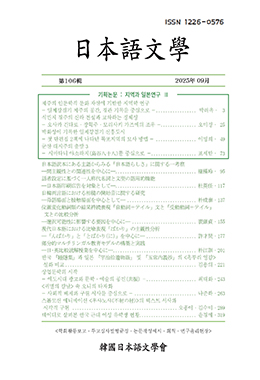
本稿では、日帝強占期における新興地域·木浦の文化的·社会的アイデンティティを、朴華成文学の初期テキストを通して再構築することを目的とする。分析対象として朴華成の最初の短編集2冊を取り上げ、木浦という新興都市の再現のあり方と作家の文学的視点を明らかにし、さらに日帝強占期における地域文学の存在様式を検証した。
朴華成文学に描かれた木浦地域は、当時の青年世代や社会的現実を反映する二重的な小説空間として機能しており、その空間的地位は〈木浦=個人的·社会的·歴史的〉性格を同時に包含する多層的空間としての意義を持つ。すなわち、朴華成は第一短編集を通じて木浦という舞台に回帰しつつ集中し、その背後に潜在する不安や葛藤、さらに女性の視点によって捉えられた近代の二重性の問題を複合的に描き出した。また短編集の諸テクストは、同一の空間を共有しながらも、世代·階層·人物の立場に応じて差異性と連関性を併せ持つ有効な作品群を形成している。
加えて、1930年代日韓文学において、朴華成の韓国語原作と翻訳された日本語小説に関する考察を通じて、植民地期の翻訳·出版環境および言語·文化的転換の過程で浮かび上がる不均衡な交渉のあり方を示すことができる。結局、朴花城における木浦表象は、単なる地域再現にとどまらず、日帝強占期文学において地域·帝国·植民地の境界と文化権力の作用を証言する独自の成果として理解され得るのである。
This study aims to reconstruct the cultural and social identity of Mokpo, a newly emerging city during the Japanese colonial period, using the early texts of Park Hwa-seong. Focusing on her first two short story collections, this paper examines how Mokpo was represented as a modern urban space and how the author’s literary perspective shaped this representation, thereby clarifying the mode of existence of regional literature under colonial rule.
In Park’s works, Mokpo functions as a dual-narrative space that simultaneously reflects the experiences of the younger generation and the realities of society. Thus, the city is depicted as a multi-layered space that embodies personal, social, and historical dimensions. Through these collections, Park returns to and concentrates on Mokpo as a stage, capturing the underlying anxieties and conflicts of modernity as well as its dualities perceived from a female perspective. Moreover, the stories, while sharing the same spatial background, constitute a coherent body of work that reveals divergences and interconnections across generations, classes, and individual circumstances.
Furthermore, Park’s Korean originals and their Japanese translations illustrate the asymmetrical negotiations within the colonial literary field, shaped by the conditions of translation, publication, and cross-cultural mediation. Ultimately, Park’s literary representation of Mokpo goes beyond regional depictions and serves as evidence of the boundaries and cultural power dynamics of the region, empire, and colony in the literary sphere of the Japanese colonial period.