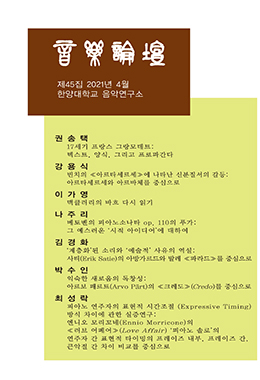
이 연구는 소리에 내면화된 문화 취향과 계급의 질서, 혹은 권력 관계가 예술에서 어떤 방식으로 드러나는지에 대한 관심으로 시작되었다. 그저 물리적인 소리로 여겨지기 쉬운 음악 창작의 재료에도 계층화된 문화와 이를 전복하려는 예술적 의지가 새겨질 수 있다. 이러한 사고는 20세기 작곡가 에릭 사티의 아방가르드와 그의 발레 ≪파라드≫에 주목하도록 만든 중요한 이유가 되었다.
≪파라드≫는 보드빌 극장이나 뮤직홀 밖의 사이드 쇼, 서커스 등의 통속적인 거리의 엔터테인먼트를 엘리트 예술에 도입한 아방가르드 작품이다. 이 작품에서 사티는 이른바 ‘저속한’ 취향이라 여겨지는 대중문화와 일상의 소리 재료를 활용하여 ‘고급’ 예술에 도전하는 아방가르드적 사유를 발전시켰다. 이 연구는 사티가 그의 예술적 사유를 발전시키기 위해 사용한 소리 재료에 주목한다. 일상의 소리, 길거리 쇼에서 사용한 온갖 소란스러운 음악, 랙타임, 케이크워크 같은 대중음악 등의 소리 재료에 내면화된 사회적 취향, 고급의 사유와 저급의 사운드 사이에서 작동하는 계층적 갈등, 그로부터 발현되는 역설적 의미를 살핀다.
This study was started from the interest of how social taste and identity, or hierarchical order that are internalized in sounds are revealed in art. This research is going to look into the fact that there are social and cultural taste or preference even for the sound materials that are considered as a musical or physical element, and how one’s social class gets revealed on the basis of Parade by Erik Satie, an Avant-gardist of the 20th century.
Parade is an avantgardistic ballet where a vaudeville or the variety sideshows outside a music hall was brought in, and where low art form such as street entertainment was also introduced in high art. Using sounds from everyday life and popular culture that are regarded as so-called common or ‘low taste’, It challenges to ‘high art’ and develops avantgardistic thought. This study is going to look into the cause of stratified conflict that was revealed in Satie’s artistic ideas and realistic sound materials. Also, it seeks to find paradoxical relationship between the ‘stratified’ sounds and ‘artistic’ thoughts.